

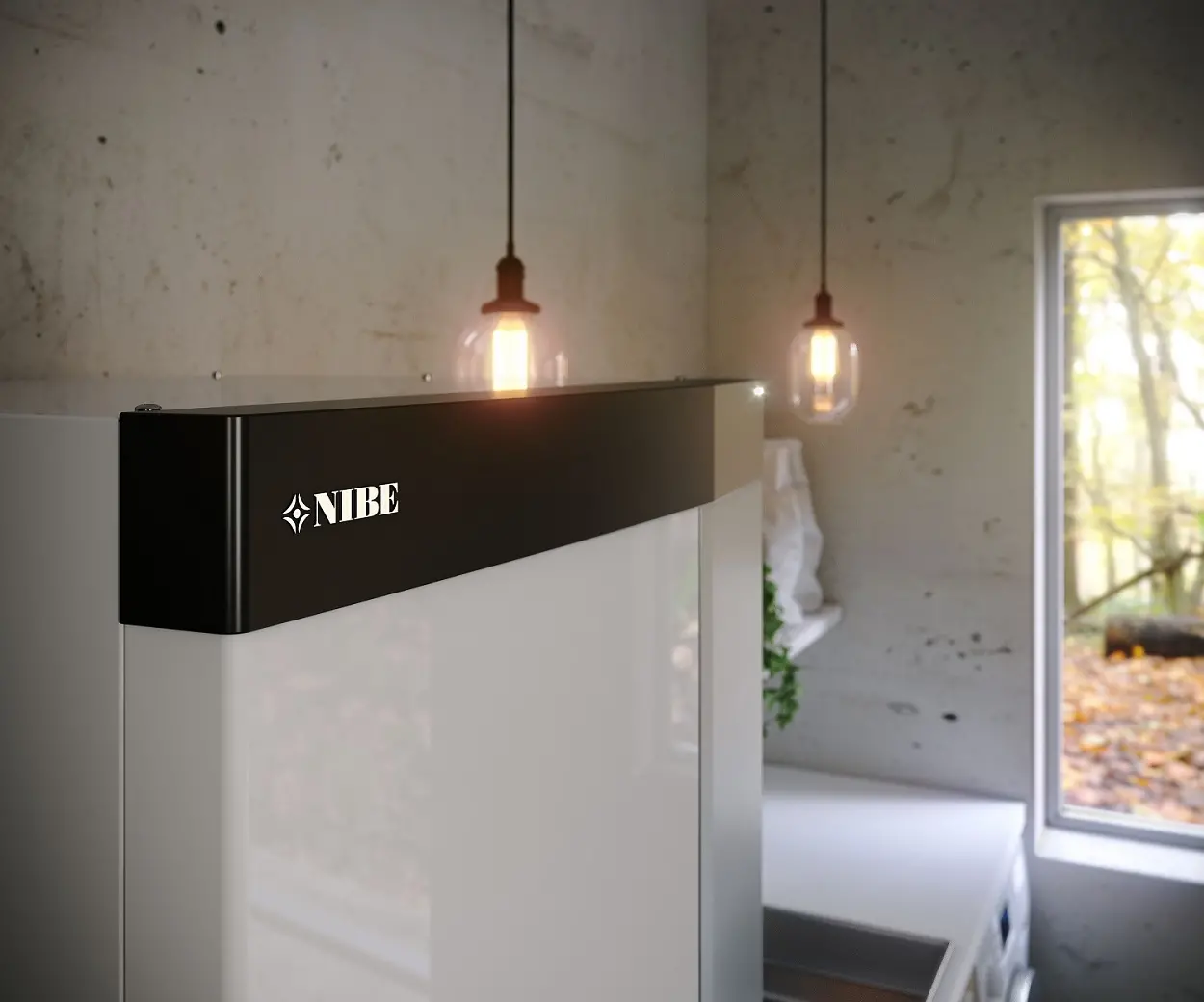

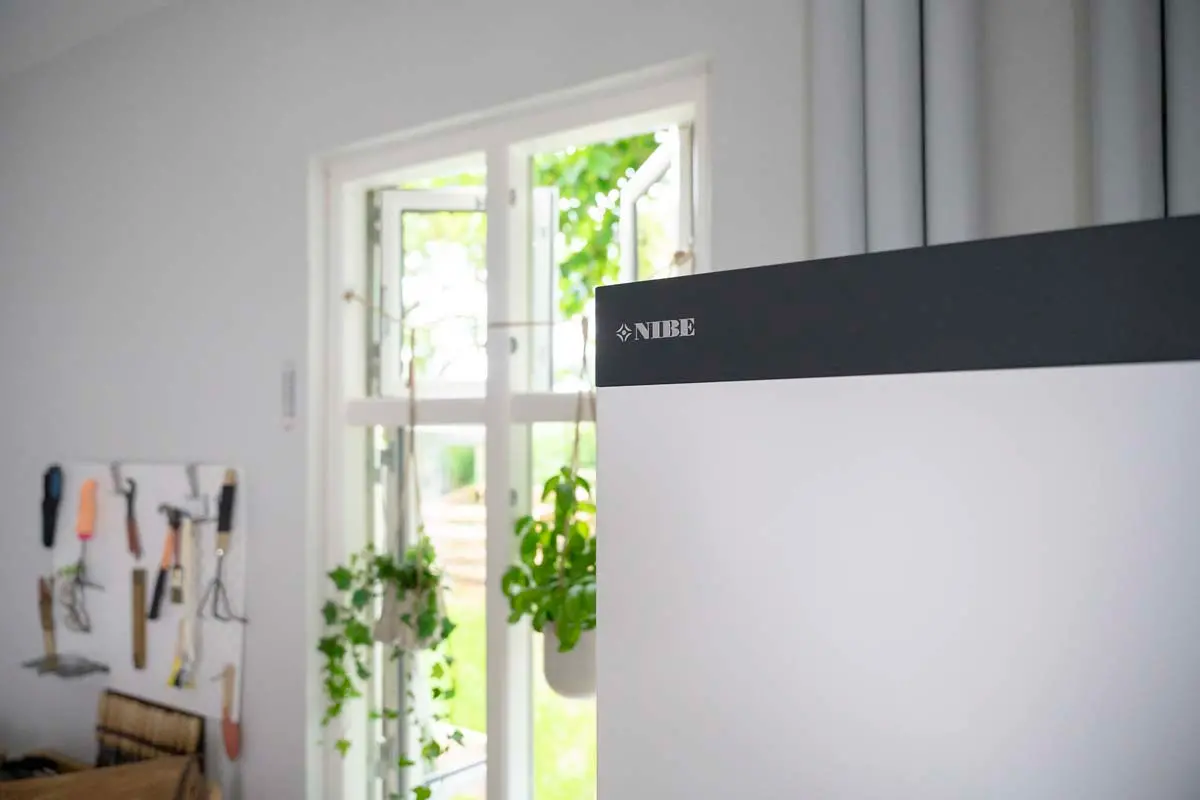
Efficient, reliable heating from the energy beneath your home
Ground source heat pumps use the natural heat stored in the ground to provide comfortable heating and hot water all year round. Even during the coldest months, the temperature below the surface stays stable, allowing the system to deliver consistent, efficient warmth.
View Our Range of Ground Source Heat Pumps
NIBE S1156
- Quiet operation, as certified by Quiet Mark, ensures minimal disruption to daily life and outdoor enjoyment.
- Integrate with a ventilation system, solar panels, pool, additional heat source and more for increased comfort
- Eligible for £7,500 Boiler Upgrade Scheme grant to save money on installation cost
- Available in three outputs for increased flexibility - 8kW, 13kW and 18kW
- Hot water cylinder separate to the heat pump - ideal with pre-existing cylinders
NIBE S1256
- Quiet operation, as certified by Quiet Mark, ensures minimal disruption to daily life and outdoor enjoyment.
- Integrate with a ventilation system, solar panels, pool, additional heat source and more for increased comfort
- Eligible for £7,500 Boiler Upgrade Scheme grant to save money on installation cost
- Available in two outputs for increased flexibility - 8kW and 13kW
- Built in 180 L hot water cylinder - ideal for homes with limited space for separate cylinders.
NIBE S1155
- Quiet operation ensures minimal disruption to daily life and outdoor enjoyment
- Integrate with a ventilation system, solar panels, pool, additional heat source and more for increased comfort
- Eligible for £7,500 Boiler Upgrade Scheme grant to save money on installation cost
- Available in one output - 25kW
- Hot water cylinder separate to the heat pump - ideal with pre-existing cylinders
NIBE F1355
- Powerful heat pump suitable for large properties
- Integrate with a NIBE ventilation system, solar panels, pool, additional heat source and more for even more comfort
- Available in two outputs for increased flexibility - 28kW and 43kW
- Eligible for £7,500 Boiler Upgrade Scheme grant to save costs on installation
- Inverter driven - Automatically increase or decrease how much the heat pump works, therefore maximising efficiency
NIBE F1345
- Powerful heat pump suitable for large properties
- Integrate with a NIBE ventilation system, solar panels, pool, additional heat source and more for even more comfort
- Available in four outputs for increased flexibility - 24kW, 30kW, 40kW and 60kW
- Eligible for £7,500 Boiler Upgrade Scheme grant to save costs on installation
How a ground source heat pump works
Just a few metres below the surface, the ground stays at a stable temperature all year round, even in winter. A ground source system captures this steady, renewable heat and brings it into your home in an efficient, reliable way.
To do this, pipes are buried in the ground, in a borehole, in a lake, or in a groundwater source. These pipes collect low-grade heat from the earth or water. The heat pump then increases this heat to a usable temperature and distributes it through your radiators, underfloor heating or hot water cylinder.
The result is a comfortable, low-carbon heating system that works quietly in the background, keeping your home warm throughout the year.
Types of collector:
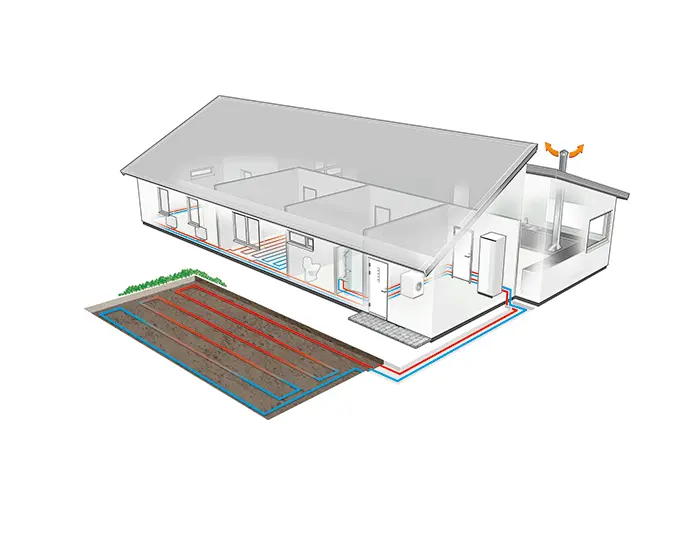
Horizonal Surface Collector
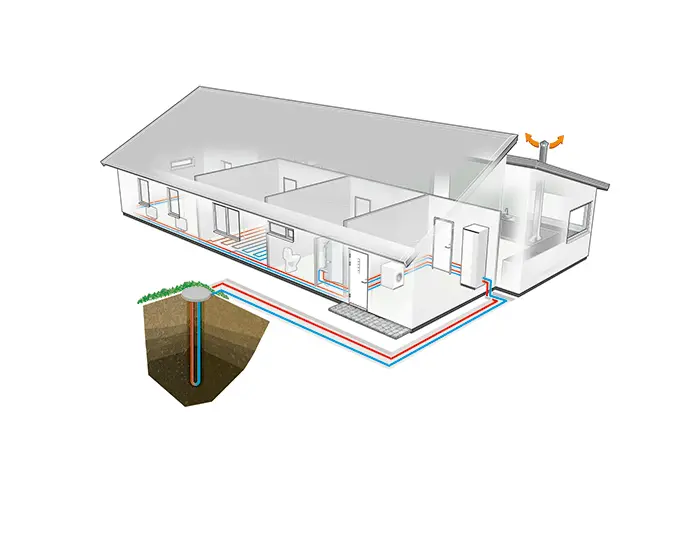
Borehole Collector
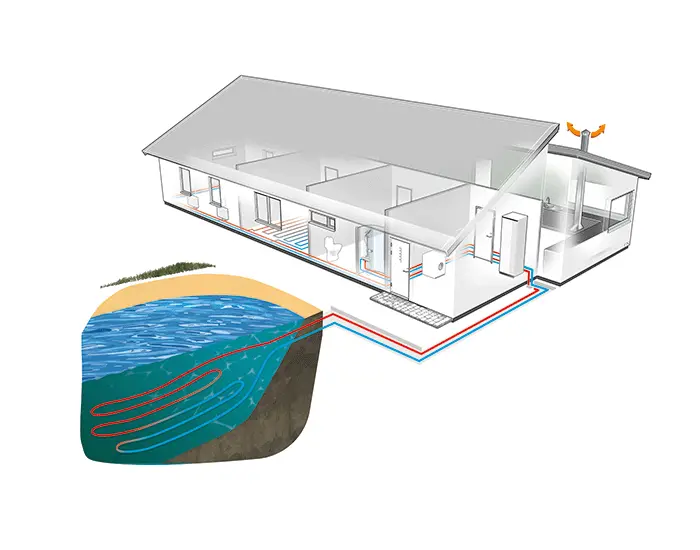
Closed Loop Lake Collector
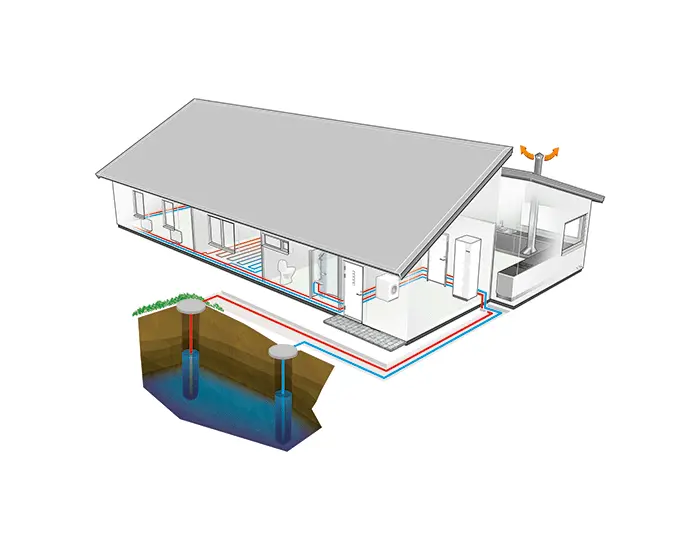
Open Loop / Ground Water Collector
What does the NIBE Ground Source range look like?
NIBE's multi-award winning ground source heat pumps come in a wide range of sizes, from 8 kW up to 60 kW, which means they're suitable for a range of property types. Whether you live in a modest house or a large country property, the system can be matched to your heating and hot water needs.
8-13 kW
Suitable for small to medium-sized homes with a slightly higher heat demand, for example:
- older or less-insulated properties that need more heating
- homes with 3-4 bedrooms
- households with 2-3 bathrooms and moderate hot-water use
13-20 kW
Ideal for larger detached homes with extra living space, multiple bathrooms, or both radiators and some underfloor heating.
20-35 kW
Designed for very large domestic properties such as substantial rural homes, period houses with large floor areas, or homes with annexes and several heating zones. This range can also serve buildings with particularly high hot-water usage.
35-60 kW
Best for exceptionally large homes, country estates, properties with multiple outbuildings, or small commercial premises like offices, workshops, community buildings or guest accommodation.
| Product Name | 8kW | 13kW | 18kW | 24kW | 25kW | 28kW | 30kW | 40kW | 43kW | 60kW |
|---|---|---|---|---|---|---|---|---|---|---|
| S1156 | ✓ | ✓ | ✓ | |||||||
| S1256 | ✓ | ✓ | ||||||||
| S1155 | ✓ | |||||||||
| F1345 | ✓ | ✓ | ✓ | ✓ | ||||||
| F1355 | ✓ | ✓ |
Ground source heat pumps need a suitable amount of land or access to a usable water or ground source, and this means they are not suitable for every property. The type and size of outside space you have will determine whether a system can be installed. If you have a large garden or grounds, horizontal pipework may be possible, as it requires a fairly generous area of land to be excavated.
For homes without this space, vertical boreholes can be an option. They require far less surface area, but the drilling process still needs clear access for specialist machinery and enough free ground to position the boreholes. In some cases, properties with access to a lake, pond or groundwater source may be suitable, but this depends on very specific site conditions and permissions. Because every property is different, a ground source heat pump is only feasible where the land conditions, access, and available area all meet certain requirements. An installer or surveyor will be able to check this early on and advise whether your home is a suitable match.
For properties with a very high heating demand, a cascade system can be set up, where multiple heat pumps are connected together for greater overall output.
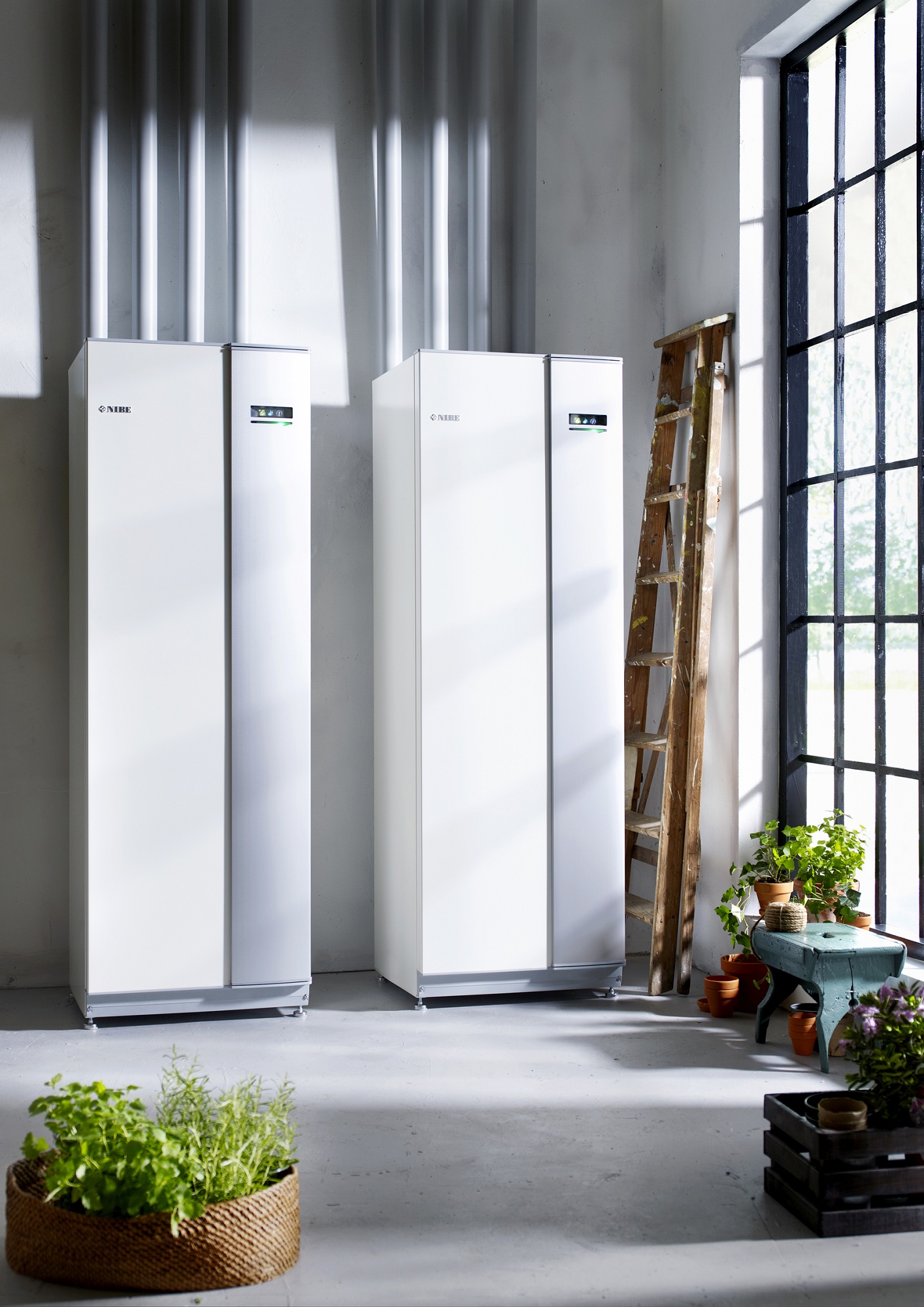
What is a cascade?
Cascade control gives homeowners a smarter, more flexible heating system by linking multiple heat pumps together under one controller. Whether you’re running two units for a large family home or several for a bigger property, the system automatically shares the workload. This not only boosts reliability, ensuring heating continues even if one unit needs servicing, but also improves efficiency by matching output to demand.
The system is fully adaptable to different needs. It can combine air source and ground source heat pumps for the best balance of performance across the seasons, automatically switching to the most cost-effective source depending on outdoor conditions. It can also prioritise hot water or heating depending on your household’s needs, making sure comfort is never compromised.

Boiler Upgrade Scheme
The Boiler Upgrade Scheme makes the switch to renewable heating more affordable. Homeowners in England and Wales can receive a £7,500 grant towards the cost of installing a ground source heat pump, lowering upfront costs and making sustainable heating more accessible.
Most NIBE ground source heat pumps are eligible for the BUS grant, as long as you make use of our NIBE Pro Installer network.

Peace of mind
All NIBE ground source heat pumps are eligible for our FlexiServ servicing plan, giving you complete peace of mind from day one. Regular servicing ensures that your system continues to run reliably, maintains optimum efficiency, and meets the requirements for full warranty protection.
With inspections carried out by qualified NIBE engineers using genuine parts, you can be confident that your heat pump will deliver dependable heating and hot water for years to come.
Related Products

NIBE S1156 Ground Source Heat Pump

NIBE S1256 Ground Source Heat Pump

NIBE F1345 Ground Source Heat Pump